Sold under Gross Margin Scheme
The Patek Philippe Calatrava Travel Time dates back from the 1950s when Patek Philippe engaged Louis Cottier to design a movement that allows the wearer to adjust the second timezone without stopping the minutes or seconds and without taking the watch off of one's wrist.
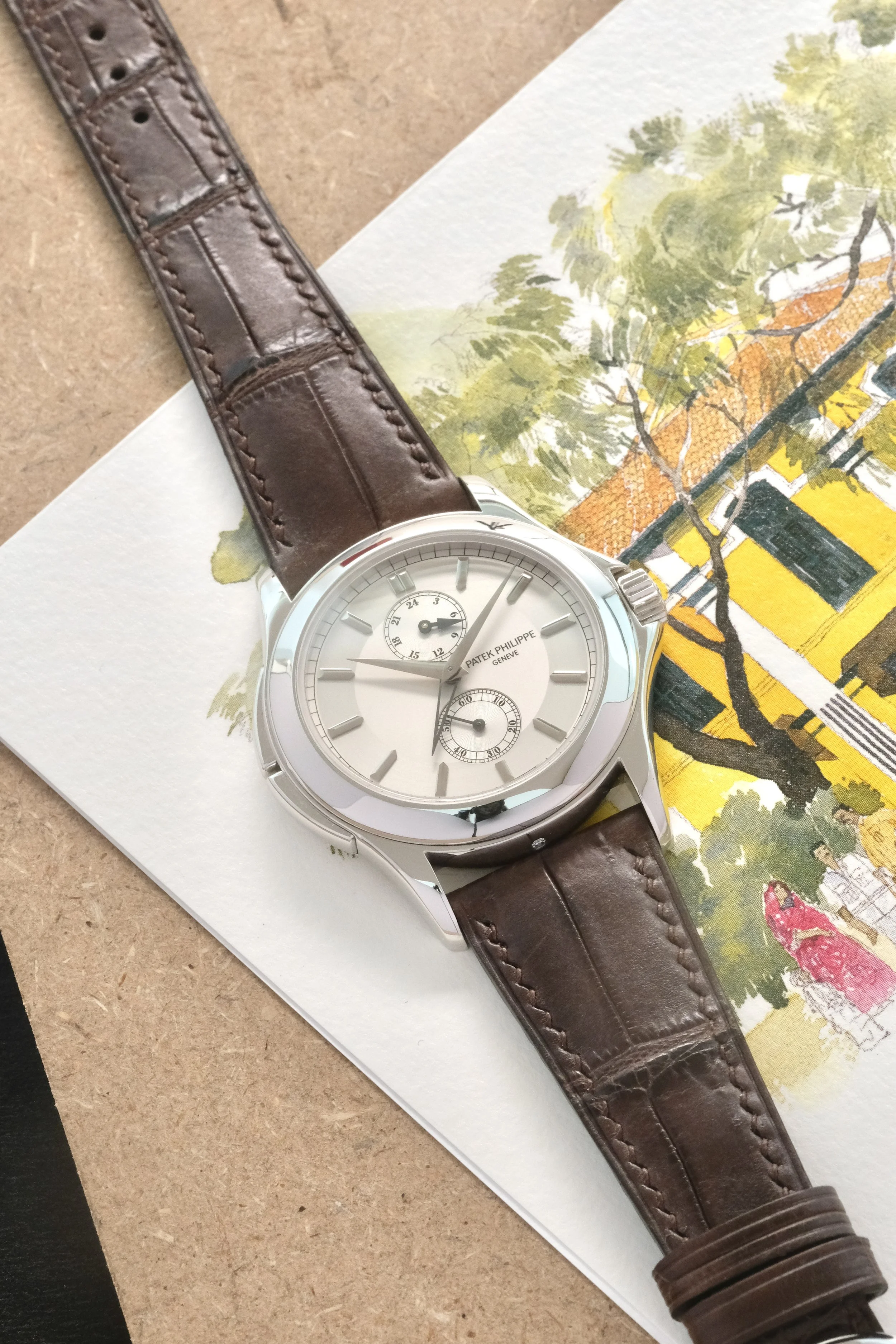
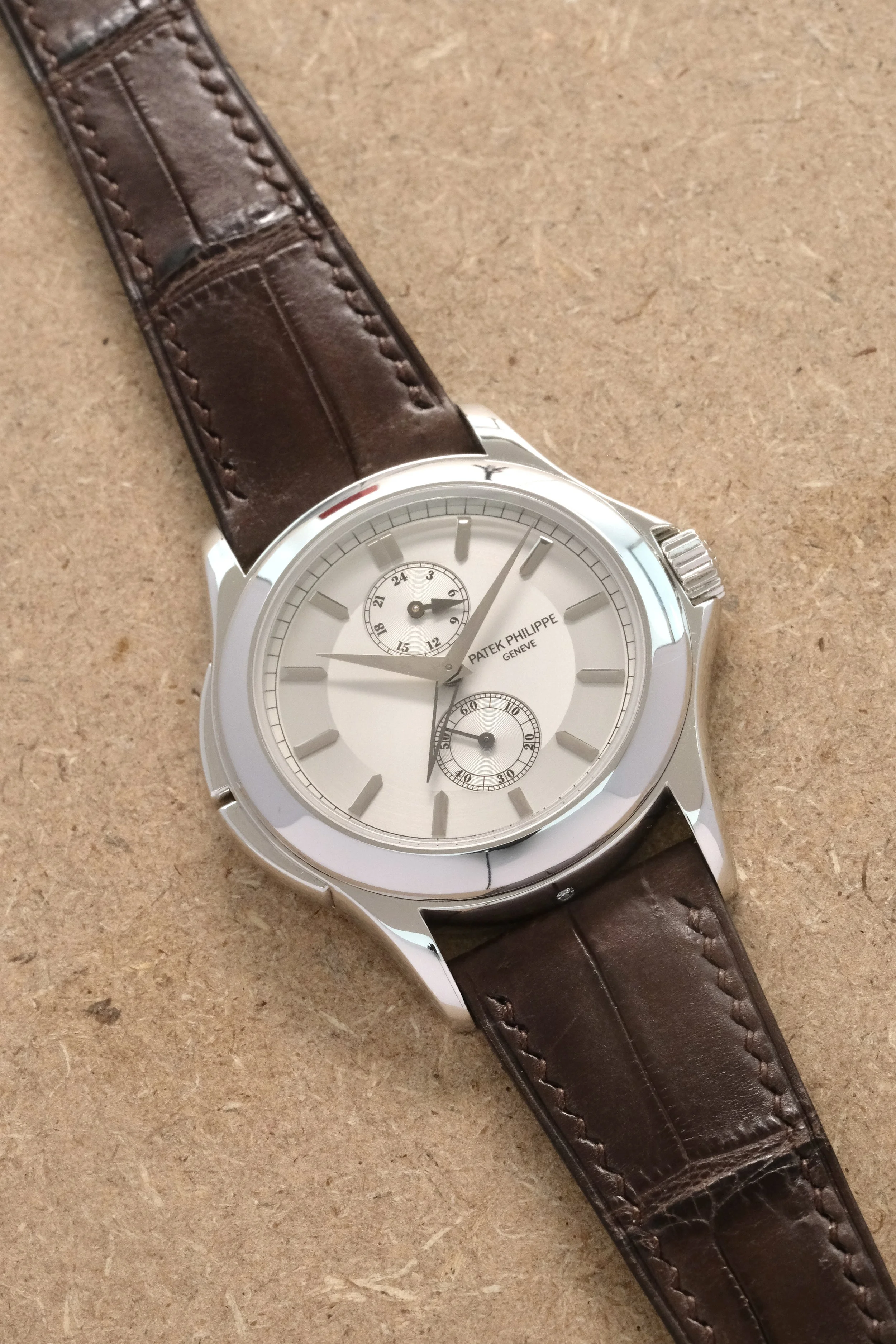
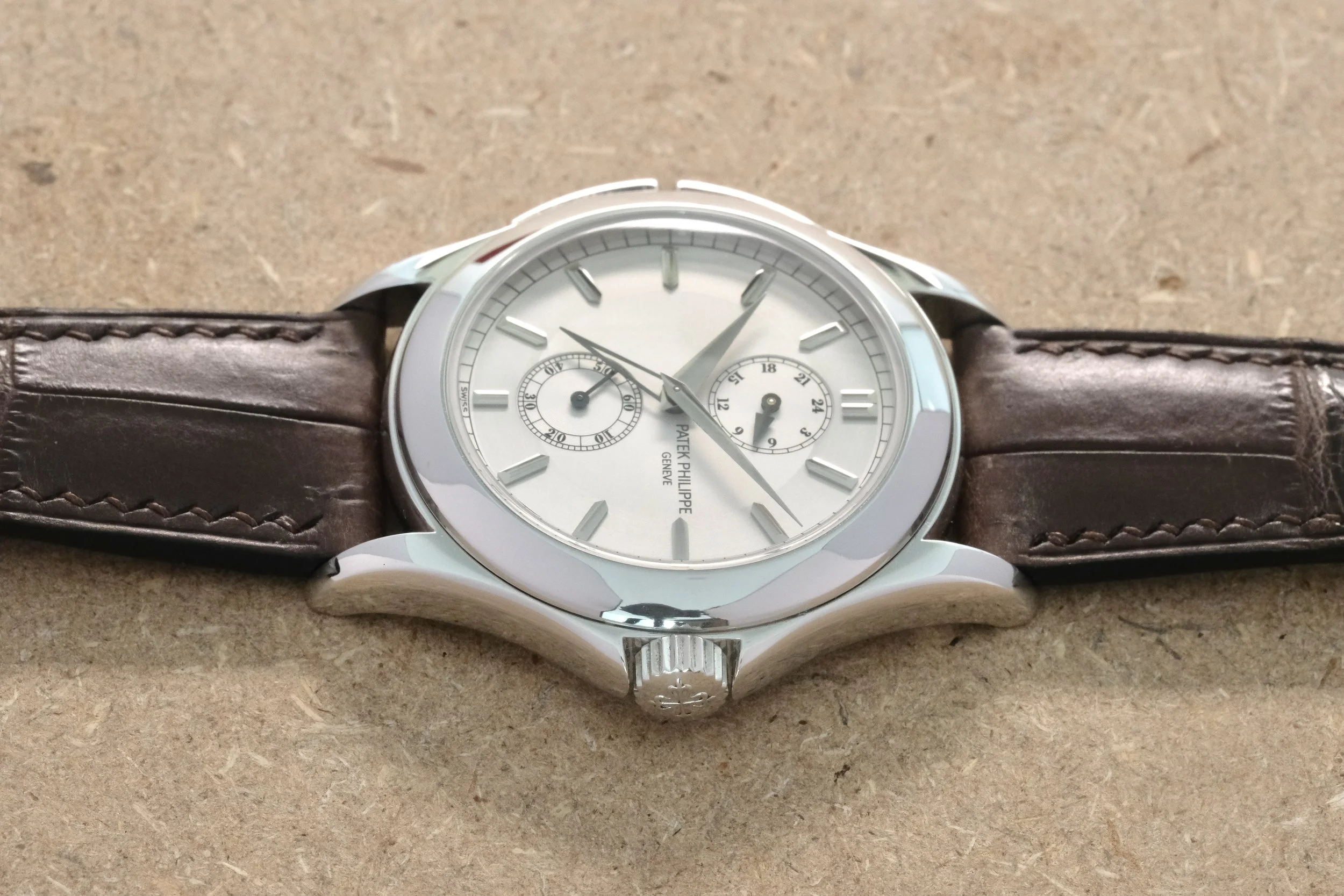
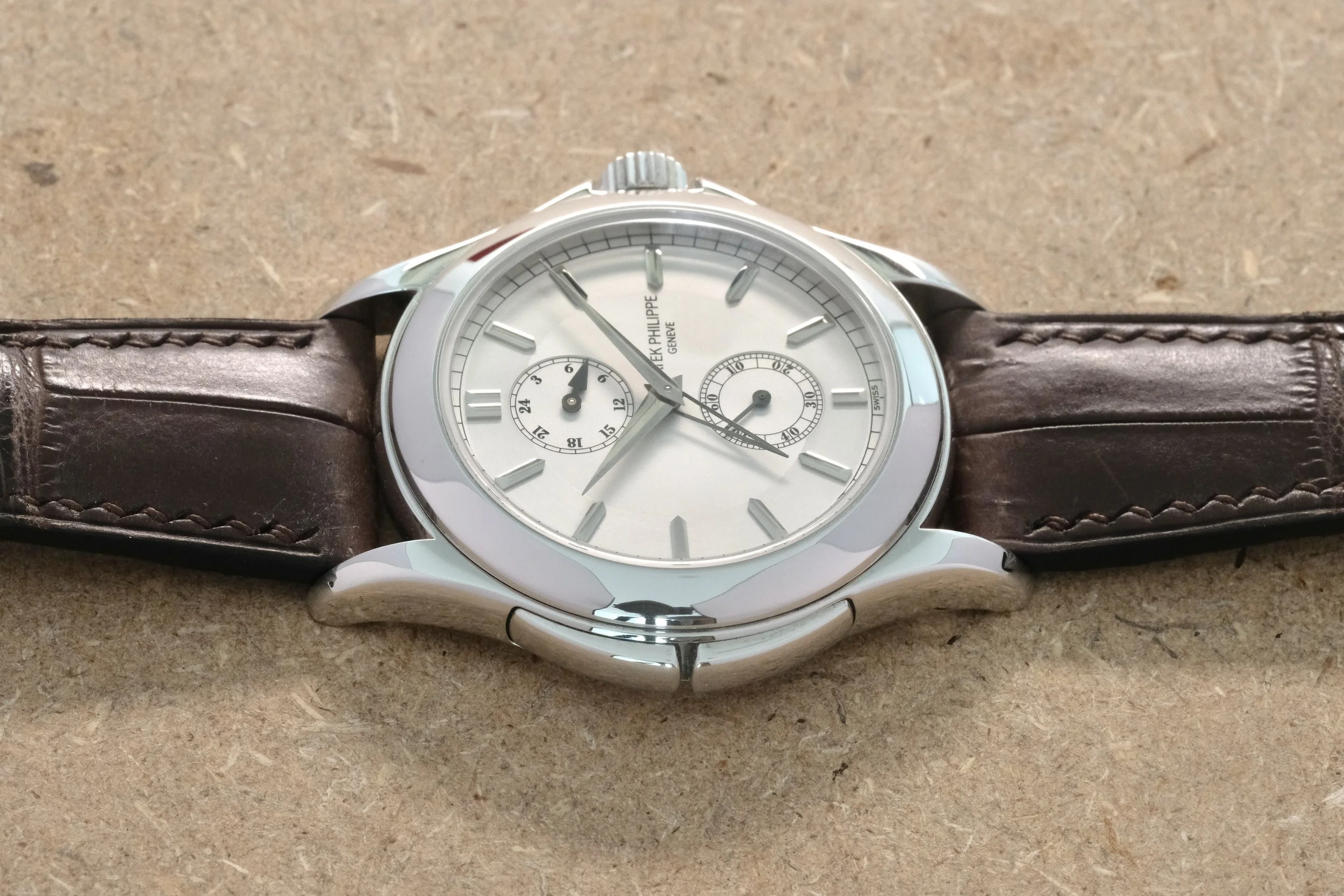
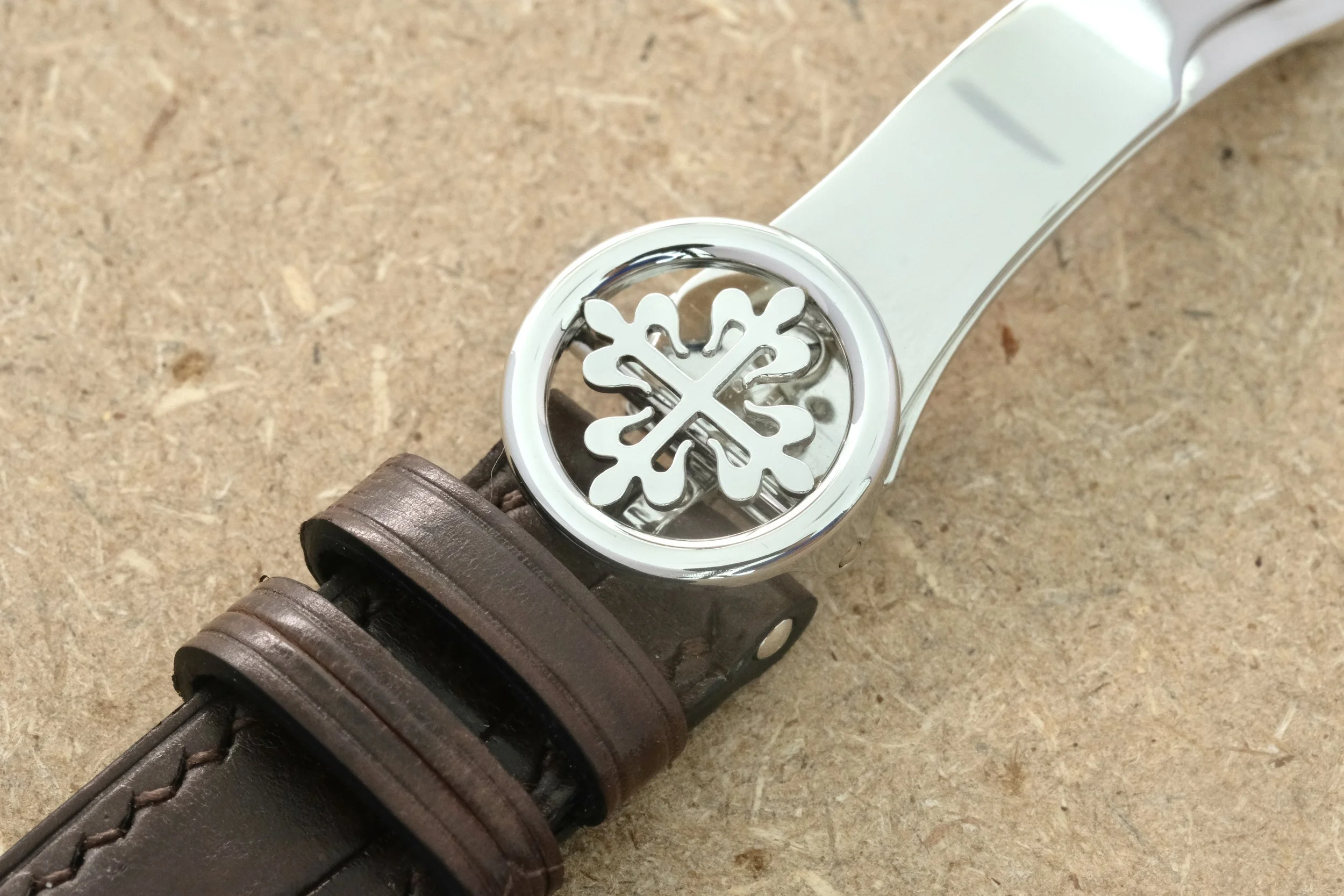
In 2001, the reference 5134 was introduced as an update to the more classical 5034. It has a sleek case measuring at 37mm in diameter with 10mm thickness in Platinum. The case features a slender long lugs and a crown guard. It has a cleverly integrated pushers on the side case to adjust the local time with ease.
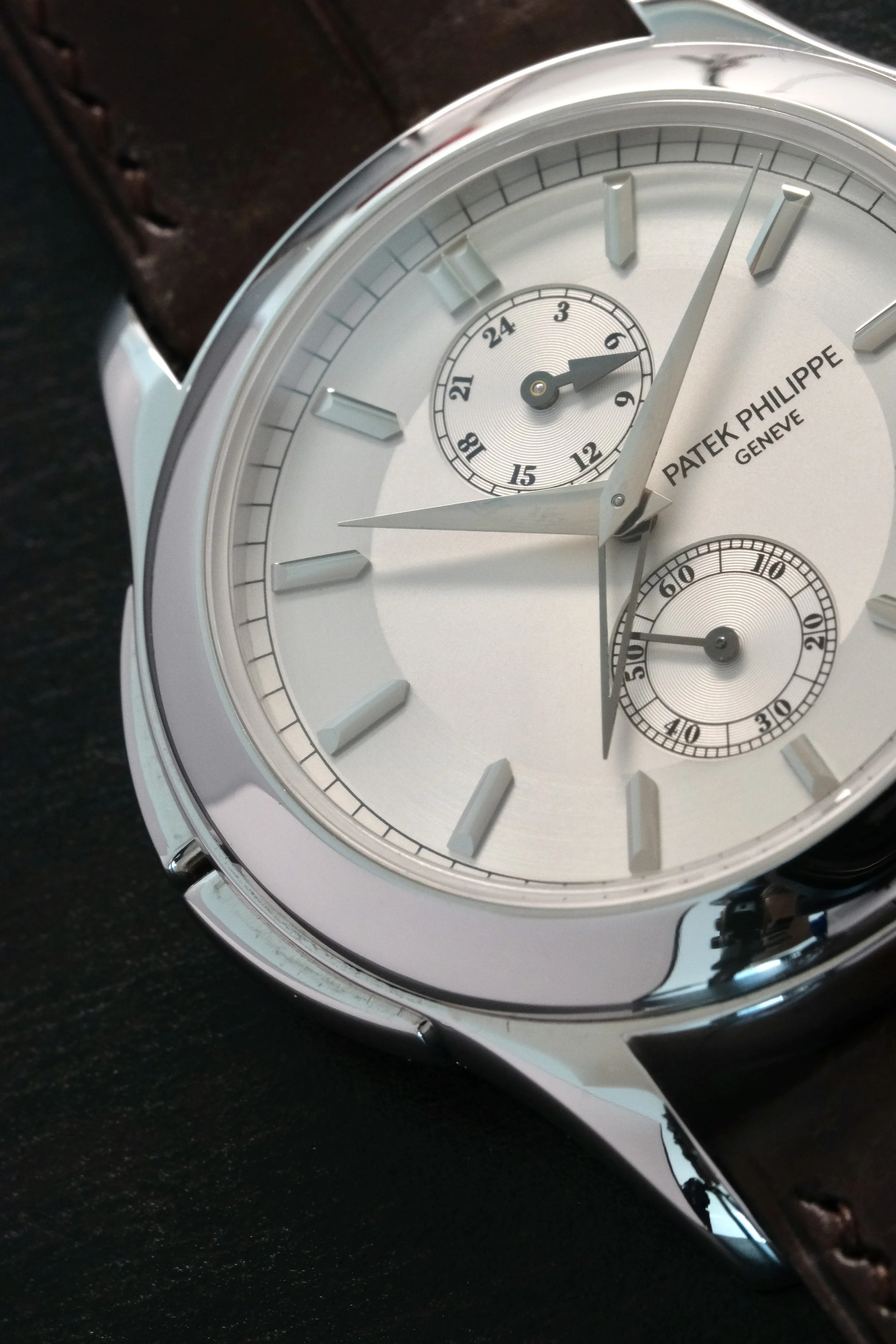
It has a two-tone silver dial with applied baton indexes paired with a set of dauphine hands and an extra skeletonised dauphine hand indicating the home time. It has two subdials at 12 and six displaying 24 hour indicator and running second respectively.
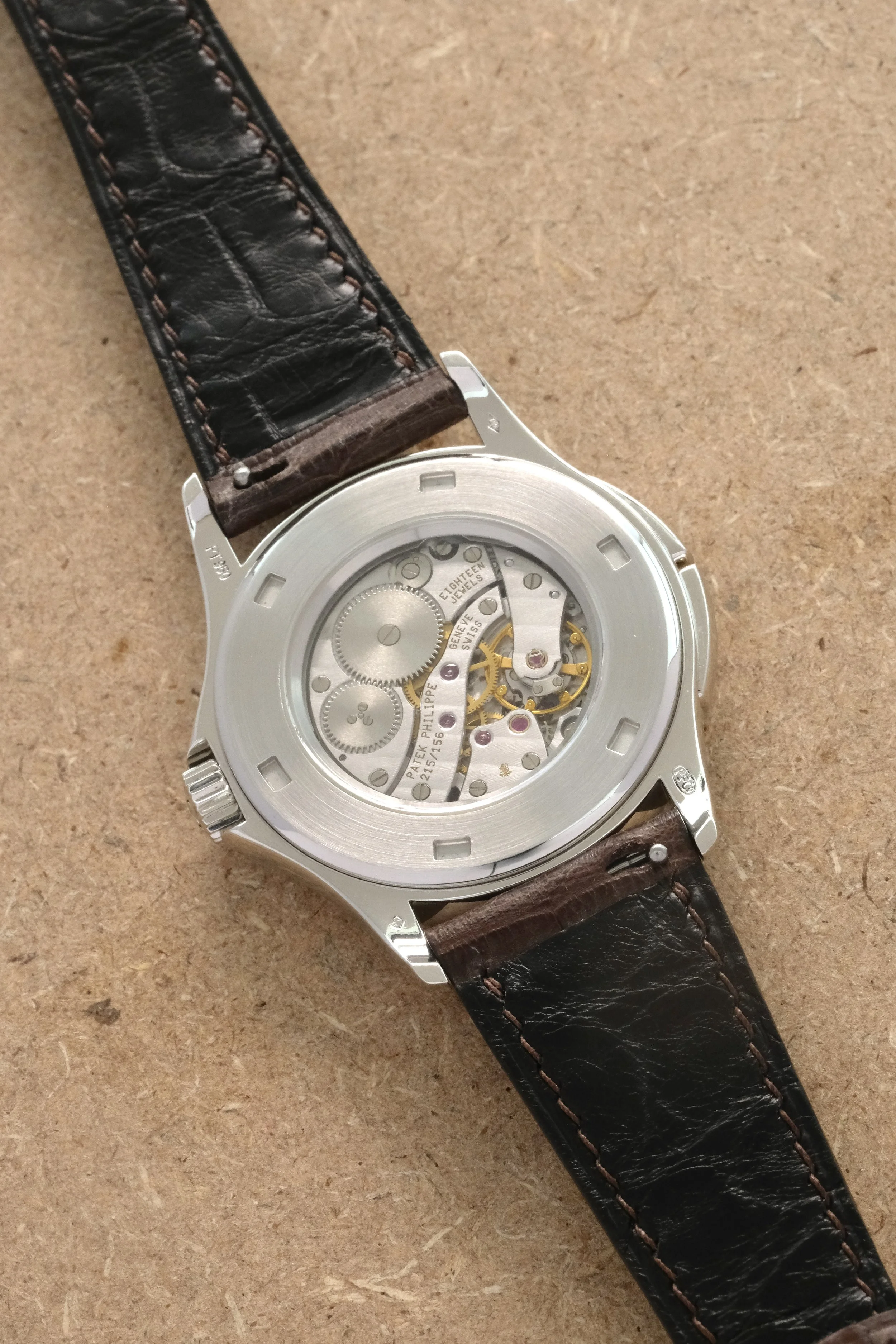
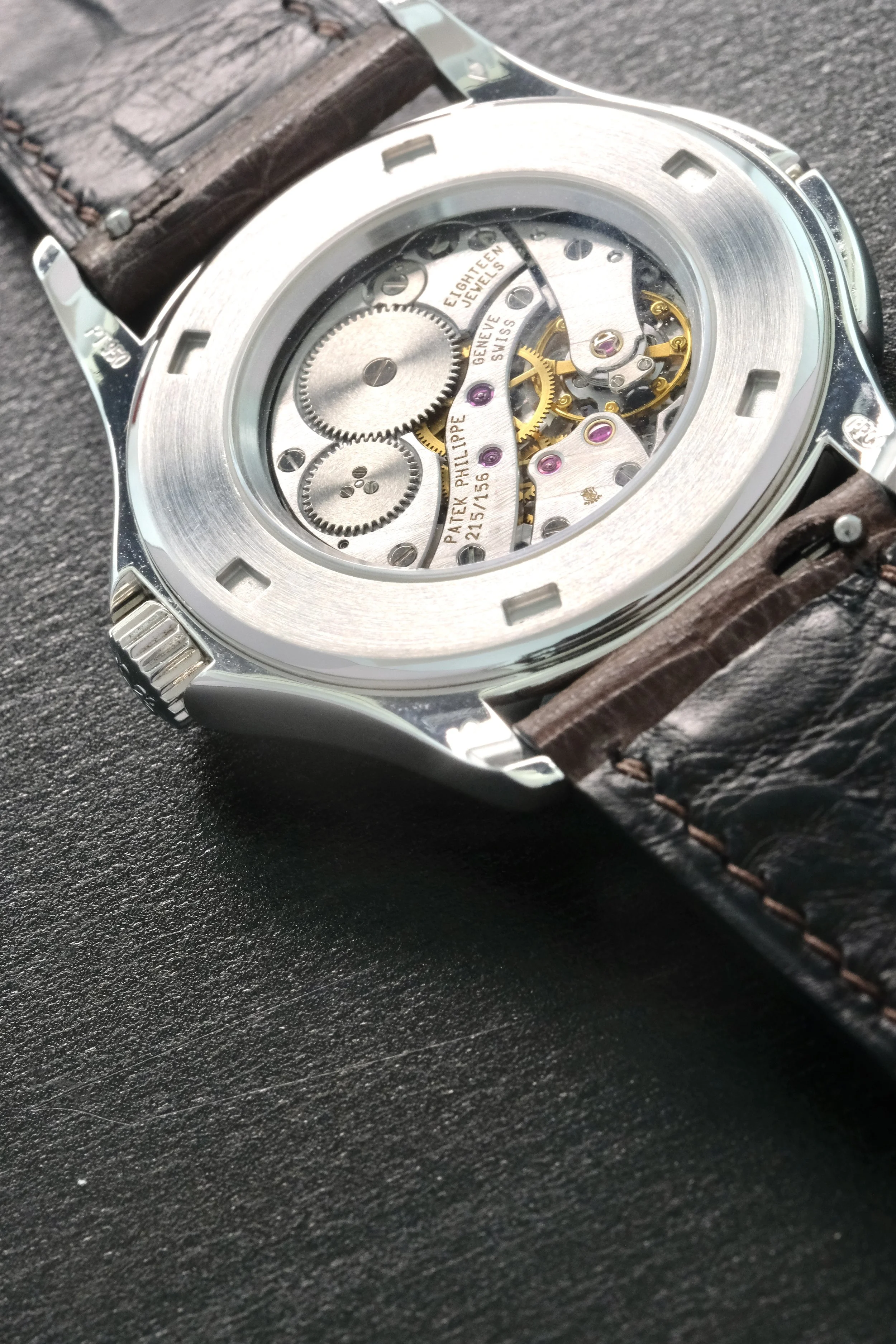
Powering the 5134P is the Cal 215 PS FUS 24H Hand Wound movement, beautifully finished with Geneva Stripes and beveled edges.
Sold under Gross Margin Scheme
The Patek Philippe Calatrava Travel Time dates back from the 1950s when Patek Philippe engaged Louis Cottier to design a movement that allows the wearer to adjust the second timezone without stopping the minutes or seconds and without taking the watch off of one's wrist.
In 2001, the reference 5134 was introduced as an update to the more classical 5034. It has a sleek case measuring at 37mm in diameter with 10mm thickness in Platinum. The case features a slender long lugs and a crown guard. It has a cleverly integrated pushers on the side case to adjust the local time with ease.
It has a two-tone silver dial with applied baton indexes paired with a set of dauphine hands and an extra skeletonised dauphine hand indicating the home time. It has two subdials at 12 and six displaying 24 hour indicator and running second respectively.
Powering the 5134P is the Cal 215 PS FUS 24H Hand Wound movement, beautifully finished with Geneva Stripes and beveled edges.