Sold under Gross Margin Scheme
The Jaeger LeCoultre Odysseus debuted in the late 1980s during a transitional era of watchmaking when the Swiss watch brands experimented with complications post quartz crisis. The Perpetual Calendar was the brand’s first modern complicated watch and modern perpetual calendar.
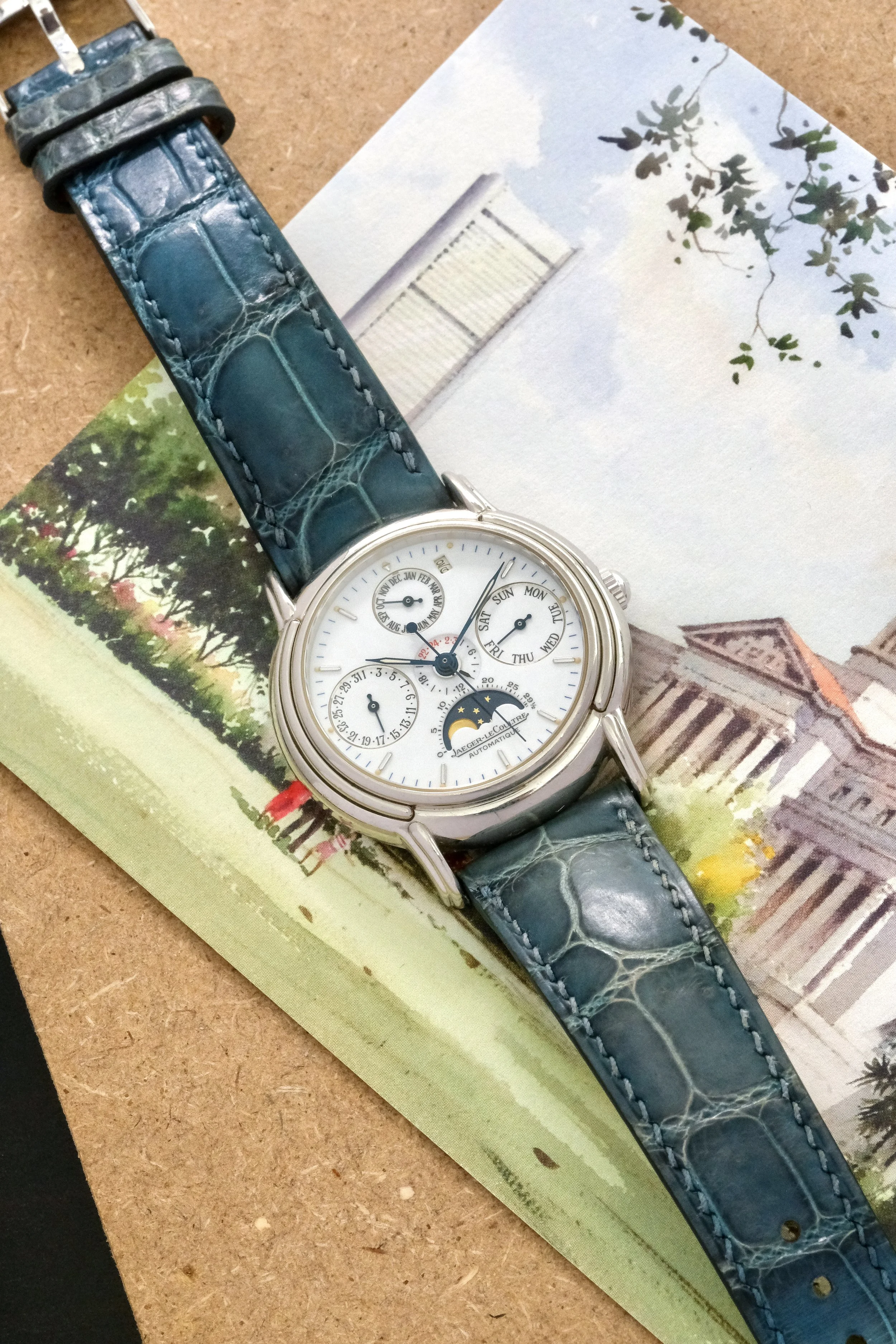
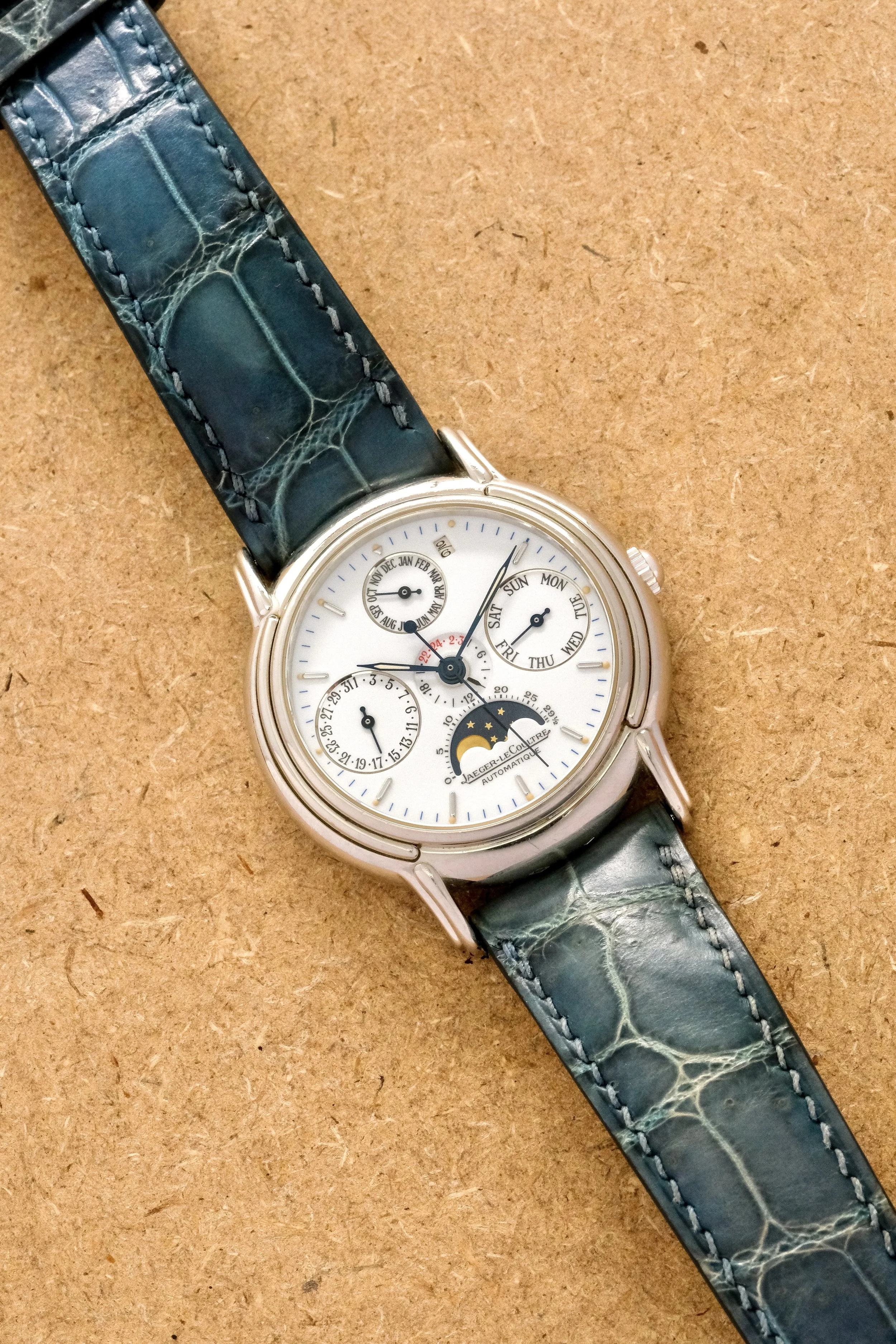
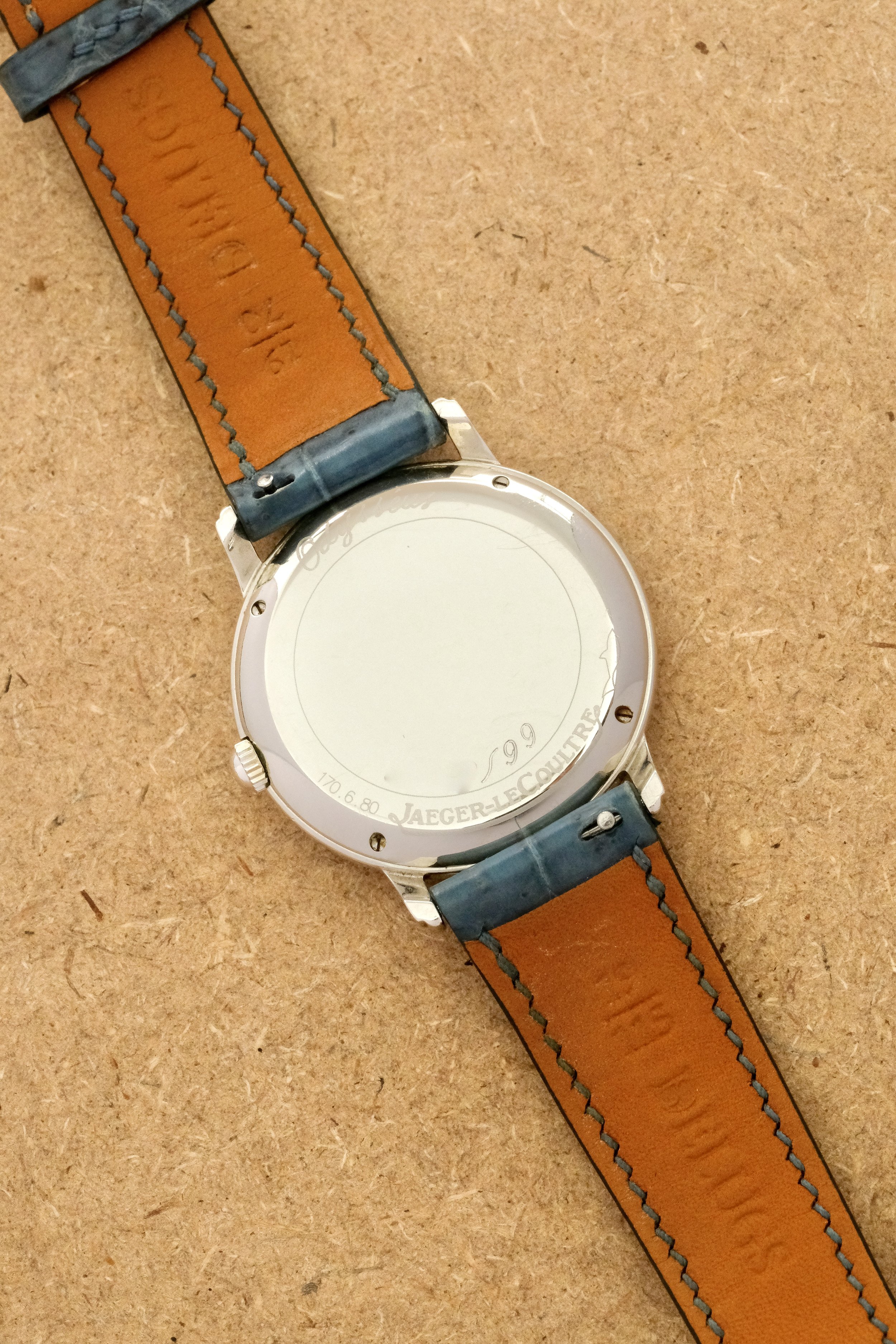
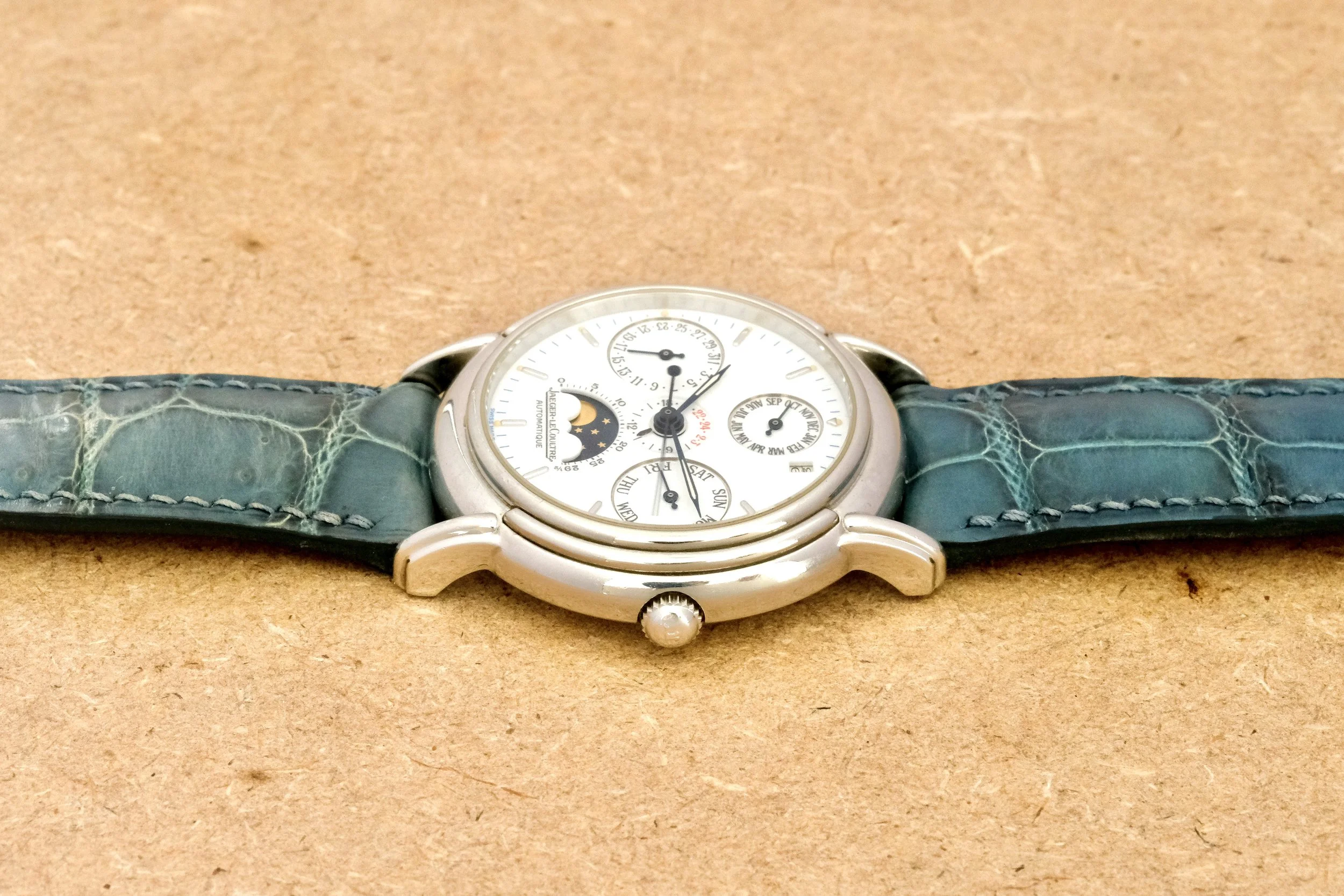
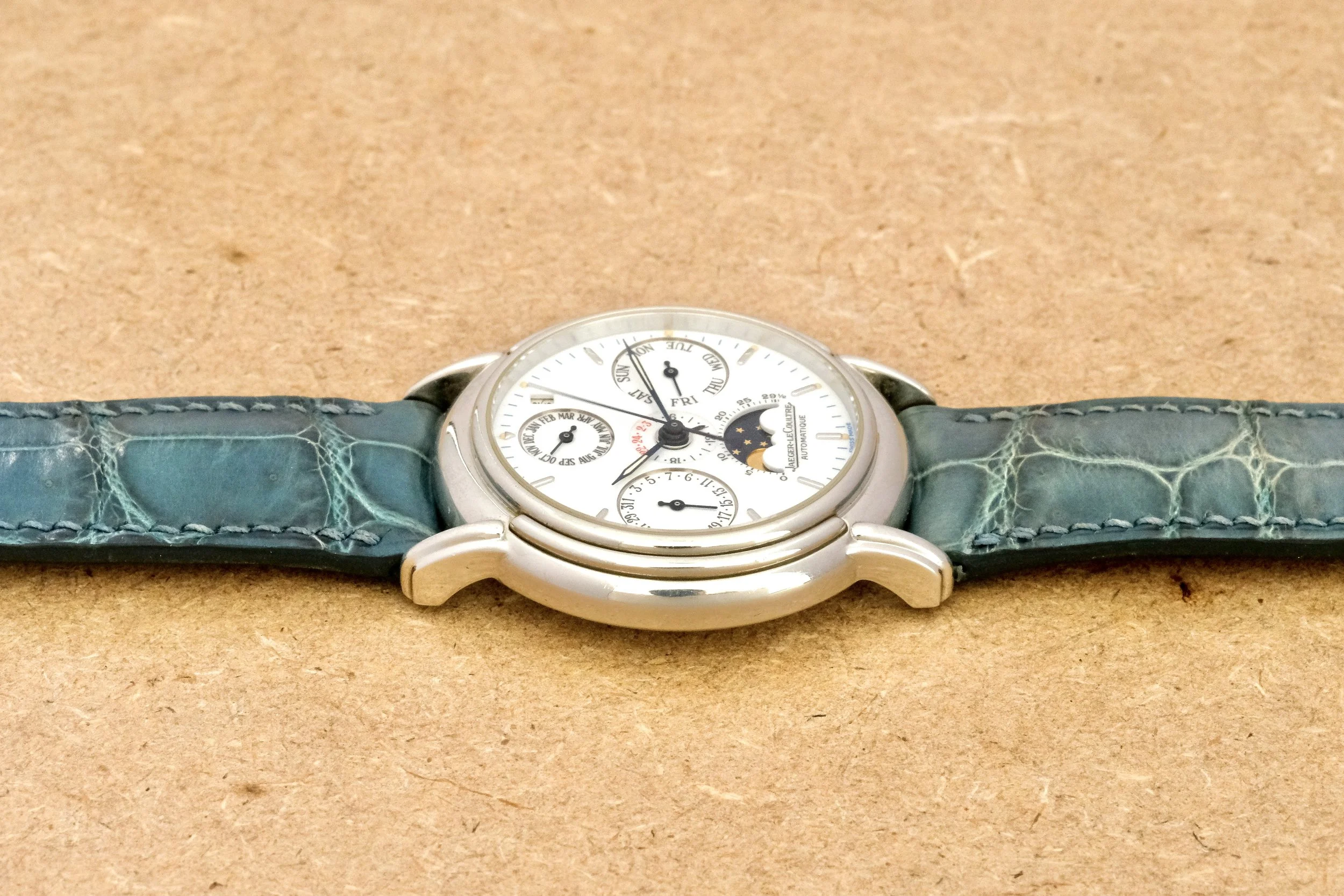
The platinum version was made as a 90 pieces Limited Edition measuring at 36mm in diameter with 8.5mm slim profile. The bezel and case has a curved profile and features a double-step design.
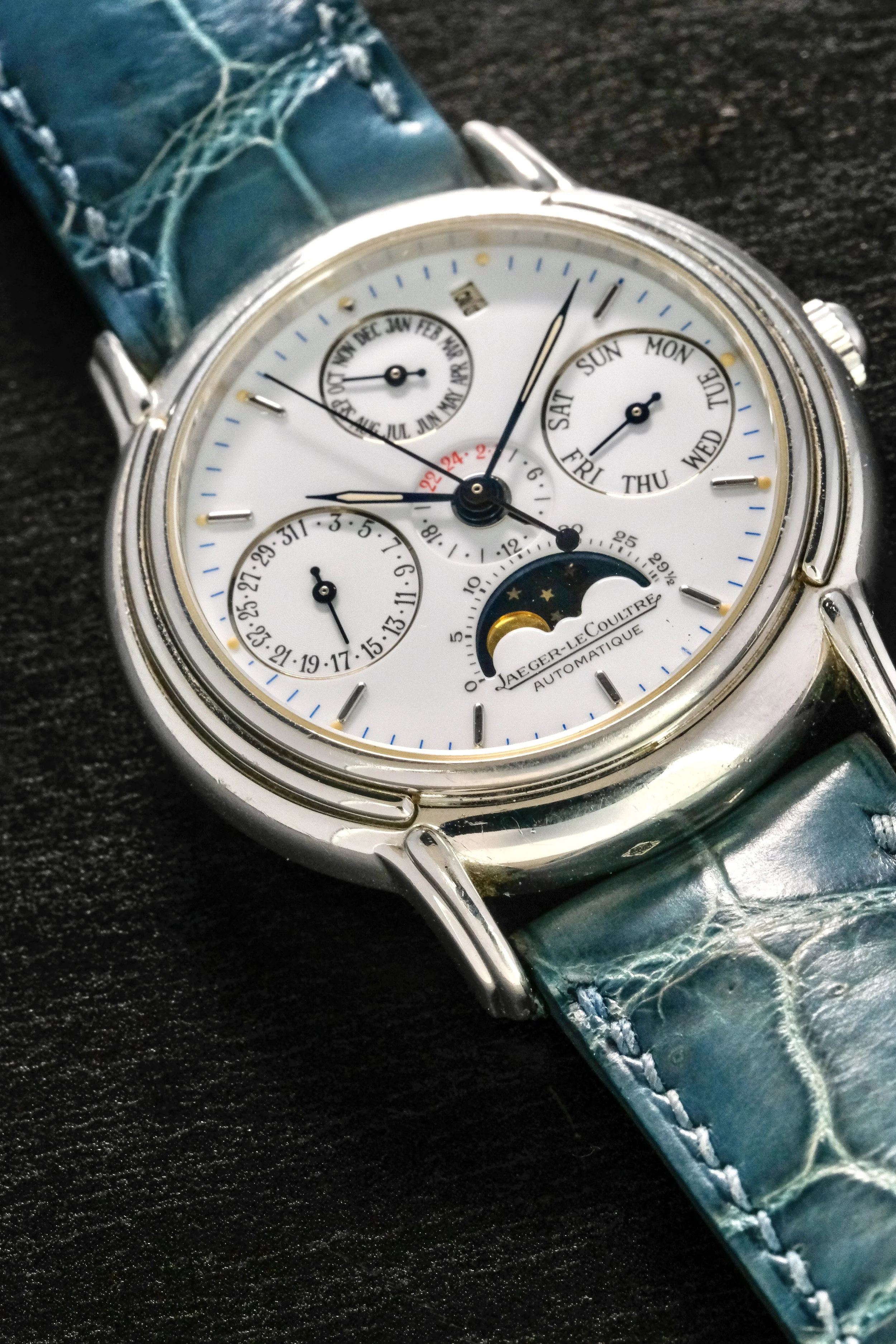
The dial is white with month and year indicator positioned at 12 o’clock, day of the week at 3 o’clock, date at 9 o’clock and moon phase indicator at 6 o’clock. There’s also a 24 hour indicator at the center of the dial that indicates when it is safe or unsafe to adjust the calendar.
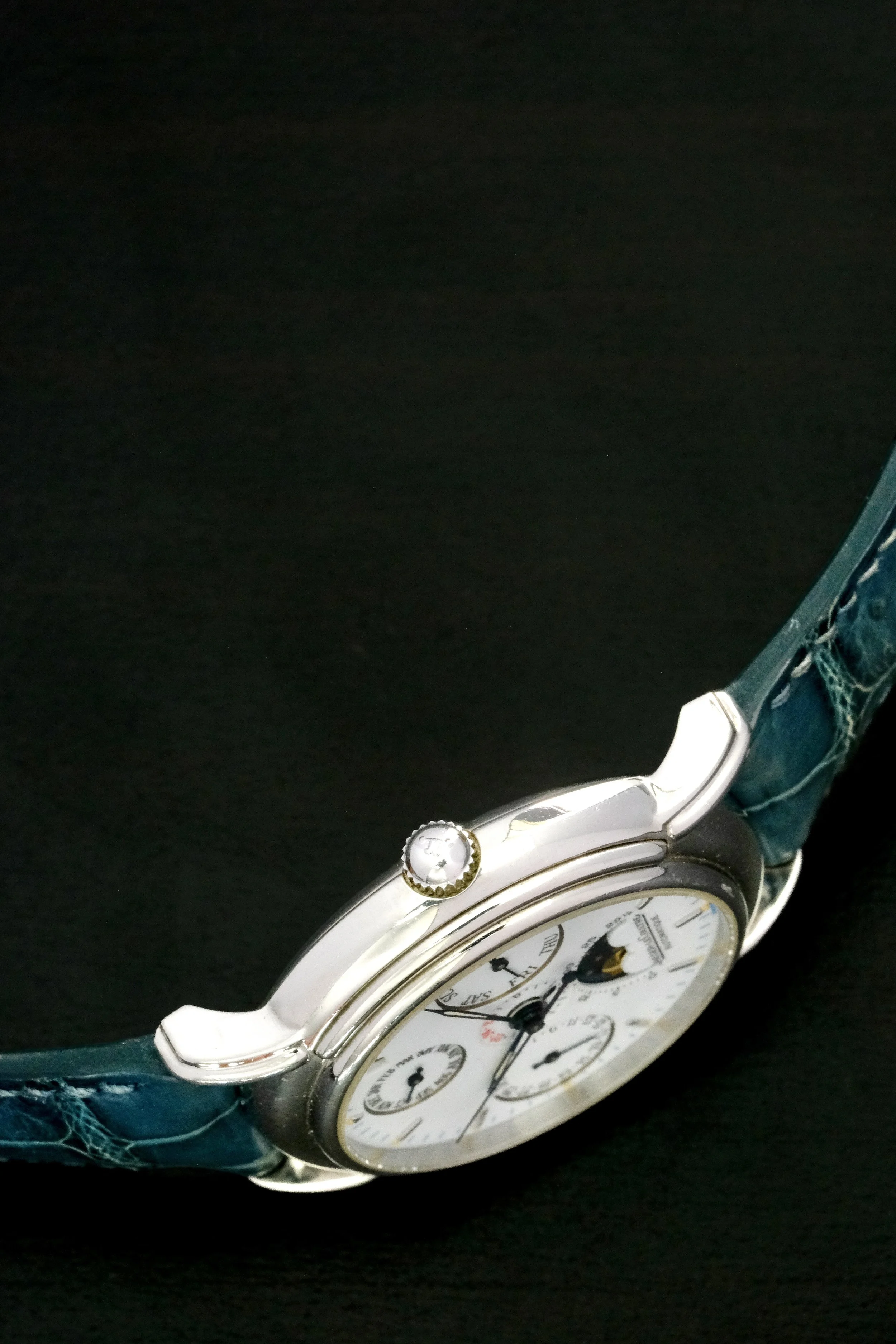
It is powered by the Cal. 889/400 ultra-thin self-winding movement with a perpetual calendar module that shares the principles with IWC’s Perpetual Calendar developed by Kurt Klaus. A clever feature of this movement is the ability to adjust the calendar directly through its crown rather than individual pushers.